


by Graham Carter
Managing Director at AutoLogic Systems
Over 35 years of creating, experimenting with and presenting digital twins, across industries including automation, transport, defence, nuclear and manufacturing, I’ve accumulated some pretty valuable lessons.
These lessons lie in the planning phase and are invaluable for management with limited or no experience of digital twins. By planning carefully, the common pitfalls can be avoided.
The models we create in our business can be very clear in scope such as producing optimised pallet patterns from known case sizes to the much more complex, for example creating a dynamic digital twin of a complex distribution centre or a large manufacturing plant to evaluate the impact of change on performance.
In the first example, the parameters are clearly defined as is the model scope, the results and assumptions are very easily understood therefore creating a useful model is straightforward. Whereas in the second example, the model can be far more complex in terms of the objectives, data and the control rules. This complexity increases the risks of the model being inaccurate, not properly understood and potentially being less useful.
So how do you ensure success when looking to build a model of a more complex system such as a distribution centre or manufacturing plant? You should ensure that the model will be as useful to you as possible by following a few simple guidelines before starting.
Set clear objectives for the digital twin
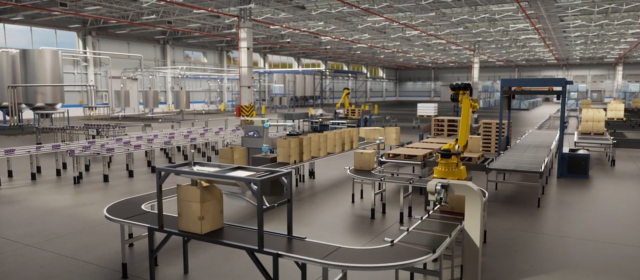 Ensure clear objectives are set for the digital twin and the results that you want from it before commissioning any work.
This is particularly relevant when using an internal team to build a model where it’s easy to just issue a general statement of requirements. For example, ‘We need to model the warehouse as performance is poor’ is much less likely to result in a useful model than a clear framework for the model which sets out the input data, scope and reporting requirements.
If you plan to use external independent consultants then they should ask the right questions to be sure the model is correctly focussed with clear objectives and scope. When you hear vague statements like ‘the model will tell us everything we need to know’ then that’s the time to be cautious and ensure those objectives and scope are fully set out.
Write down the objectives and include the model scope to make sure these are agreed and understood by all stakeholders before making a start. When defining model scope, ensure you consider data requirements, alternative scenarios to be modelled and the experimentation phase. The guidelines below will help you with this.
Make sure you have the data and information to achieve your objectives
Put the focus on the areas vital to meet those key objectives. Make certain that accurate information and data for the processes you need to model can be obtained so that the model is going to be as representative of the true system as possible. If you know that part of the system has plenty of capacity and you already operate similar systems then there is little point spending hours modelling that process in detail. Simply treat the area as a black box with a known capacity and inputs/outputs so you can focus on the areas that matter.
Obviously when the model is being used for communication or training purposes it can be desirable to show the entire operation and this may indeed be one of the key objectives, particularly when creating a 3D digital twin. But you still don’t need to waste time on precision modelling in areas that are unnecessary for obtaining the required results when a visual representation will suffice. It simply reduces time available for experimentation.
It’s also important here to make sure any such simplifying assumptions are communicated effectively. It’s all too easy for the uninformed to proclaim ‘the model is wrong’, without an understanding of the scope and assume that the model is therefore not useful.
Plan the experimentation phase carefully
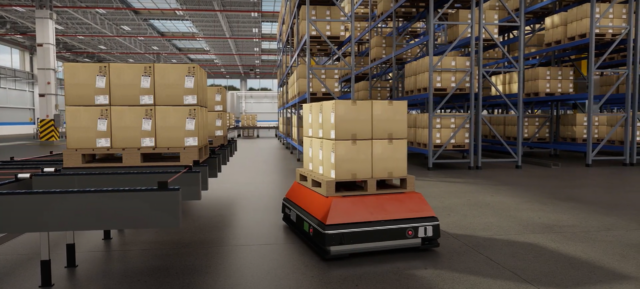 We need to make sure our digital twin is going to be as useful as possible. For this to be the case, you need to ensure model experimentation is planned and conducted properly.
The model is unlikely to show the results you predict (otherwise we wouldn’t have built it in the first place!) and it’s very likely to show you need to make changes. These changes can be significant and are going to fall within the time allowed for experimenting. It’s key to allow sufficient time for changes when planning the scenarios you want to consider during experimentation. If you run out of time to make changes due to other deadlines then the model will be seen as less useful.
Make sure the experiments will be in line with the objectives and that you have obtained the most accurate data you can. By using actual data (eg. for customer orders, production schedules etc) collected historically from similar operations you minimise the risk of assuming unrepresentative data. It’s more accurate to change this data to reflect forecast changes in demand on the system being modelled and more meaningful to stakeholders than an assumption around data.
Remember you only have finite time for experimentation but the options for experimentation are infinite. Consider each scenario and the parameters you want to change carefully before committing to starting model experimentation.
Conclusion
As for any project, careful planning gives you better results. By following the above guidelines before you leap in, you can be much more confident that your digital twin is going to be useful.